The Blind Edge
Throw the form book out. Ballybofey to La Paz,the price never moves.
Trusted by over 300 real punters worldwide1
Not reckless. Blind. There is a difference.
Do not look at the form, do not look at the table, and you do not even need to know whether they have won a game in five.
Form study is finished. Not because it never worked, but because a machine now does it better than you or I ever could, and it does it in the time it takes you to open the app (I spent two years trying to prove that wrong).
This philosophy has taken 332 units at average odds of 3.45.
Homework does not help, it is costing you money.
Take the National League North.
English football's sixth tier is where big old clubs end up when things have gone badly wrong. Chester, Southport, Darlington, Macclesfield, Hereford and Morecambe are all down there now, and every one of them still carries the support it had on the way down. Morecambe were a League One club three seasons ago (two relegations on the bounce, and the crowd came with them).
So they take hundreds on the road, sometimes well over a thousand, to places like Radcliffe and Marine and Hebburn, whose own neighbours all follow United or Liverpool or Newcastle. The away end is regularly the biggest thing in the ground.
And home advantage is a crowd effect.
In that division the noise has swapped ends. Yet the price still charges a home premium in every fixture, because it gets built off a league table and a home flag, and neither of those knows who filled the ground.
So back the away side there inside one narrow band. Four in every ten win, at an average price of 3.22. You only need three. Twelve months of that so far, and £34 back on every £100 you put through it.
No form study found that. Structure did.
The Blind Edge, in money
£2,000 bank · Jan 2023 to dateTHE PROBLEM
Value betting is dead
If value betting has felt like wading through treacle these past couple of years, you're not imagining it.
The big firms run their own trading systems now, repricing a match in real time on betting pressure, injury news, even a player posting a strapped ankle on Instagram. The slow, lazy price that shrewd punters used to fill their boots with gets cut in seconds, not hours (I used to set an alarm for the Tuesday morning lines, which tells you how long ago that was).
And it isn't just the layers tooling up. The exchange is so deep on the big leagues now that studies have found it prices more accurately than the bookies themselves. You can get six figures matched on a Premier League market without shifting the price a tick.
So here's the honest conclusion, and it took me a while to swallow it. Trying to beat the market on information is a mug's game now. You won't out-think a syndicate with a spreadsheet, and you won't beat an algorithm to the team news. If your edge depends on knowing something before the market does, you haven't got an edge. You've got a hobby.
So I sat on me hands for a bit and stopped playing that game. Then almost by accident, I found a much better one.
THE EVIDENCE
Four prices that have been wrong for years
A lane is a type of matchup the market constantly gets wrong. These four have been running for years, through winners, losers and everything in between.

Why the market gets it wrong. This one has paid for four straight seasons, about three longer than most edges last once somebody finds them. Northern Ireland's top flight has quietly split in two. Linfield, Larne and Glentoran are fully professional now, and everybody else turns up having done a day's work. Larne is the clearest case, with roughly £5m of Purplebricks money, a rebuilt ground, a first title, and lately an American group taking half the club.
So the market has spent four years re-rating the big names upwards, and it has been right to.
Here is what it forgets. Stangmore Park holds two thousand with three hundred seats, so seventeen hundred are stood up and close enough to be heard. The average gate is 1,241 and falling.5 Tight, noisy little grounds, full of the sort of support that turns up in January because it is their club.
For the home side this is the night the season gets remembered for, in front of everyone they know. For the professionals it is a fixture between a European qualifier and a title race.
The market cannot price a wet Tuesday. So the home side in this band is a small club written off in their own ground. They lose most weeks, which is why the price sits where it does, and across four seasons they have lost less often than the price requires.

One of the most profitable lanes on the book. That is +95.3 units, or £1,906 at £20 a point, from a division most punters could not name a single club in (I could not either, before the data made me). Losing nearly three in four is not the flaw in this lane. It is the reason the price is there.
Why the market gets it wrong. This is a division of part-time clubs, most of them inside the same city and several within twenty minutes of each other. Think about what home advantage actually consists of (a hostile crowd, unfamiliar surroundings, a long journey) and then delete most of that. The away players slept in their own beds and got a bus across town.
But the price is built off the two cheapest signals going, the league table and the home side, and both flatter the fancied team. A market that has never asked whether home advantage means anything here keeps charging a premium designed for professional football, and it has kept charging it, unchanged, for three and a half years and 376 bets.
+48.2 units. £964 at £20 a point. All of it from backing draws in a country most people could not place on a map (and no, it is not one freak club doing the lifting, I checked).
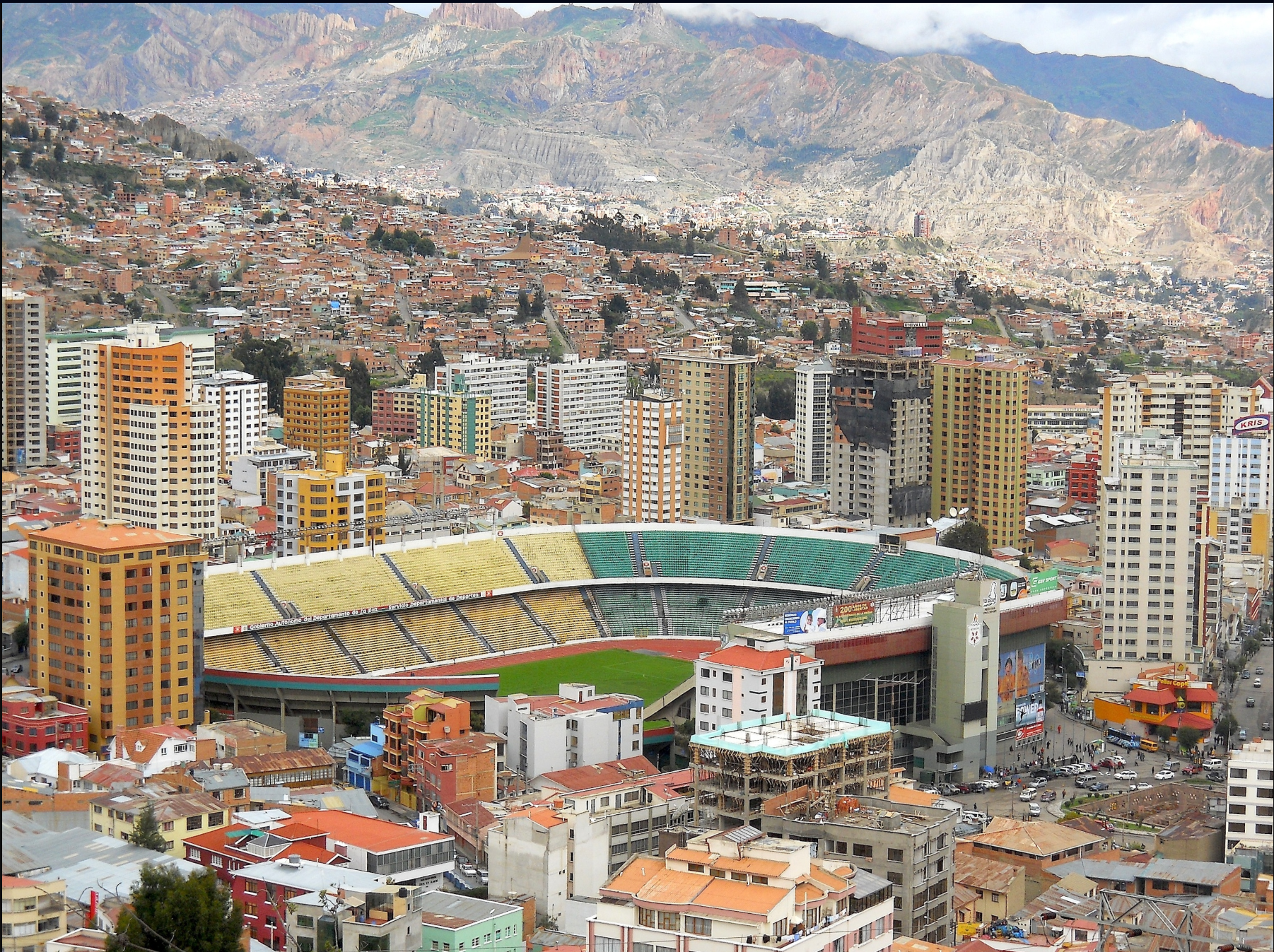
Bolivia's top flight is played at altitudes nowhere else on earth tries to host professional football. La Paz sits at 3,600 metres. El Alto is higher again. Potosí is higher still. And then Santa Cruz sits down near sea level.
Why the market gets it wrong. Everyone knows about the altitude and the prices reflect it, heavily. A lowland side travelling up gets written off, and rightly so. But the same home premium gets applied when both clubs are altitude clubs and the advantage cancels out entirely. What you get then is two teams who both know exactly how to manage thin air, playing at a low tempo, conserving everything, neither able to break the other down.
That is a recipe for a level game, and the market is still charging for a home edge that is not in the fixture. The draw drifts out to a price that assumes somebody will win it. Better than a third of them finish level, against a price that says a quarter should.
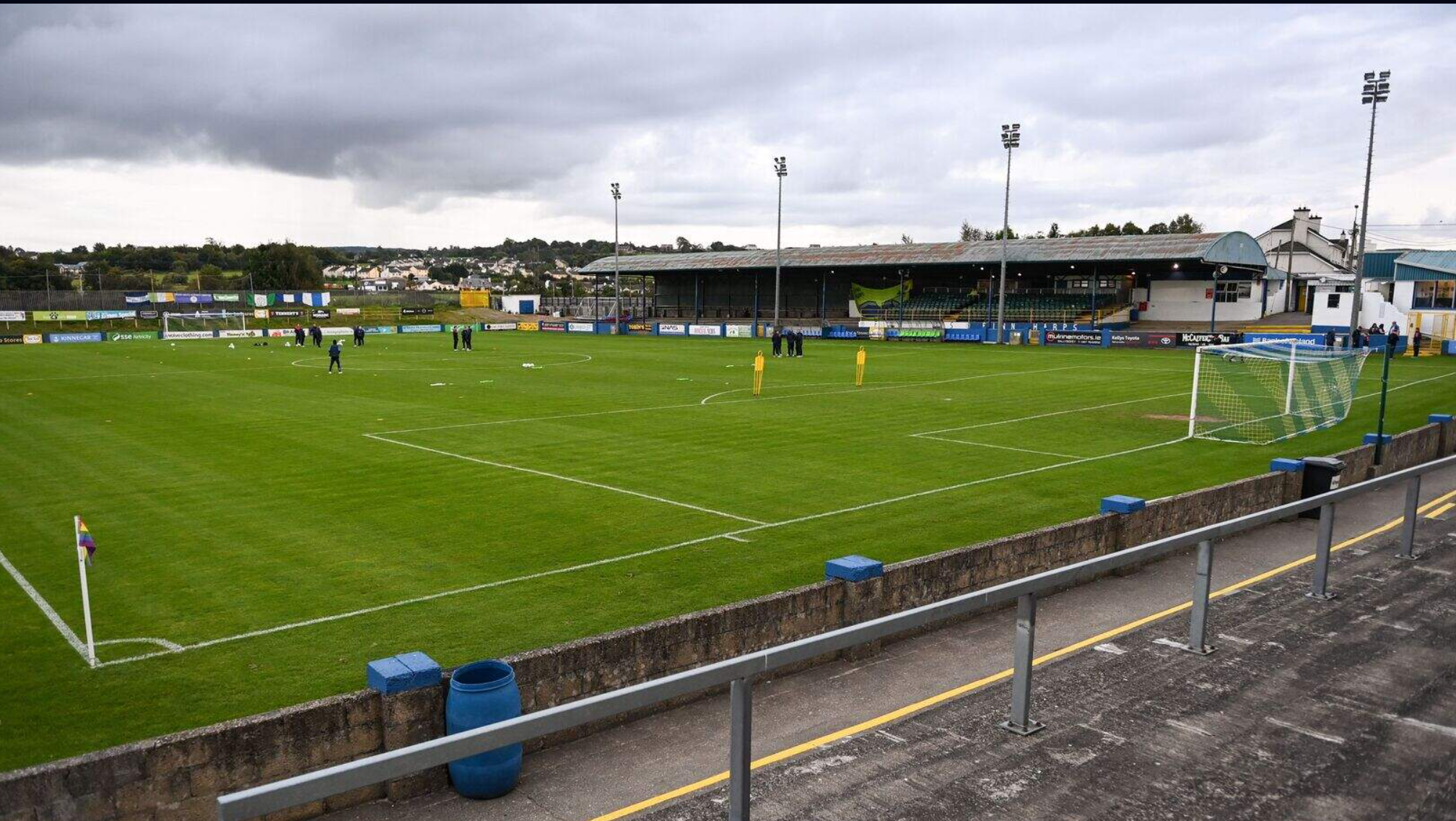
Why the market gets it wrong. The League of Ireland is the fastest growing football story in Europe that nobody prices properly, and not only at the top. In the second tier, a division of part-timers, Cork City were pulling gates over 2,800 while Athlone's crowds grew 36% in a single year (Friday nights, mostly, which suits if you work Saturdays).
Above them sits a Premier Division that went fully professional in 2025 and hoovers talent upwards every season. So fallen giants and relegated full-timers drop into the First Division carrying big reputations and shorter prices than they have earned, Dundalk being the obvious one, and the market funds those short prices by going the other way on everybody else.
That is the gift. Cork City went up as champions and Dundalk came down with their full-time reputation intact, then won the division at a canter. The market prices that traffic beautifully at the top of the table and lazily everywhere underneath it, which is where the everyday home side sits. Four seasons of qualifiers say it is wrong about that exact type of club, in the same direction every time.
One thing makes it usable, mind. Most leagues this size have no exchange traffic worth the name, yet the League of Ireland has a British and Irish following behind it, so the prices are actually there to take.
WHY IT'S THERE
Nobody in Zacatecas is on Betfair
Football went global. The knowledge didn't.
Twenty years ago you bet on the matches near you. Now you can bet on anything, anywhere, off your sofa at seven in the morning (have a nose around a Mexican second tier market some Tuesday and you will see what I mean). Which sounds like progress right up until you ask who is actually setting these prices.
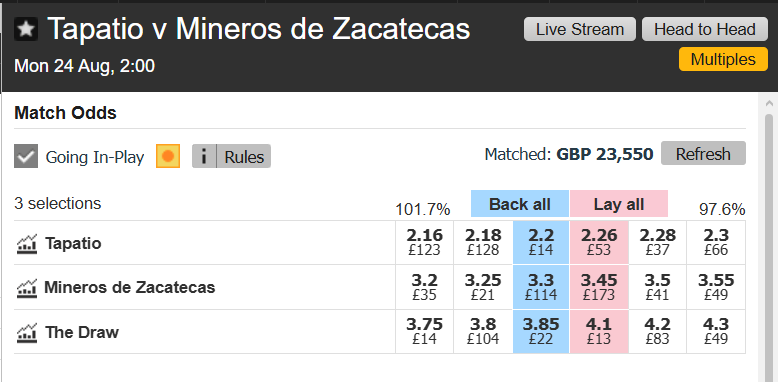
Now ask yourself whose money that is. It is not Mexicans in Zacatecas, who haven't got an exchange account, they have a bet at their local Caliente shop. It is semi-professional punters in Manchester and Munich and Rotterdam, working down a fixture list, glancing at a few stats, pricing a game in a city they could not point to on a map.
They don't know which of those clubs hasn't paid its players since May. They don't know the state of the pitch. They don't know the away side sacked the manager on Thursday and it never left the local radio station.
Take the Egyptian Premier League. Look down the team list and you find a petroleum company, a bank, a tile manufacturer, a handful of army and ministry sides. Clubs with no town behind them and no crowd to speak of, several of them sharing the same few grounds in Cairo because they have no ground of their own.
Then there is the crowd, or rather the absence of one. Egyptian football has spent the best part of a decade playing to empty stands. Two stadium disasters, a national ban on supporters, and a policy of letting a few hundred ticketed fans back in and then taking it away again the moment anything flares up. Whole seasons have gone by with the biggest clubs in Africa playing in front of nobody at all.
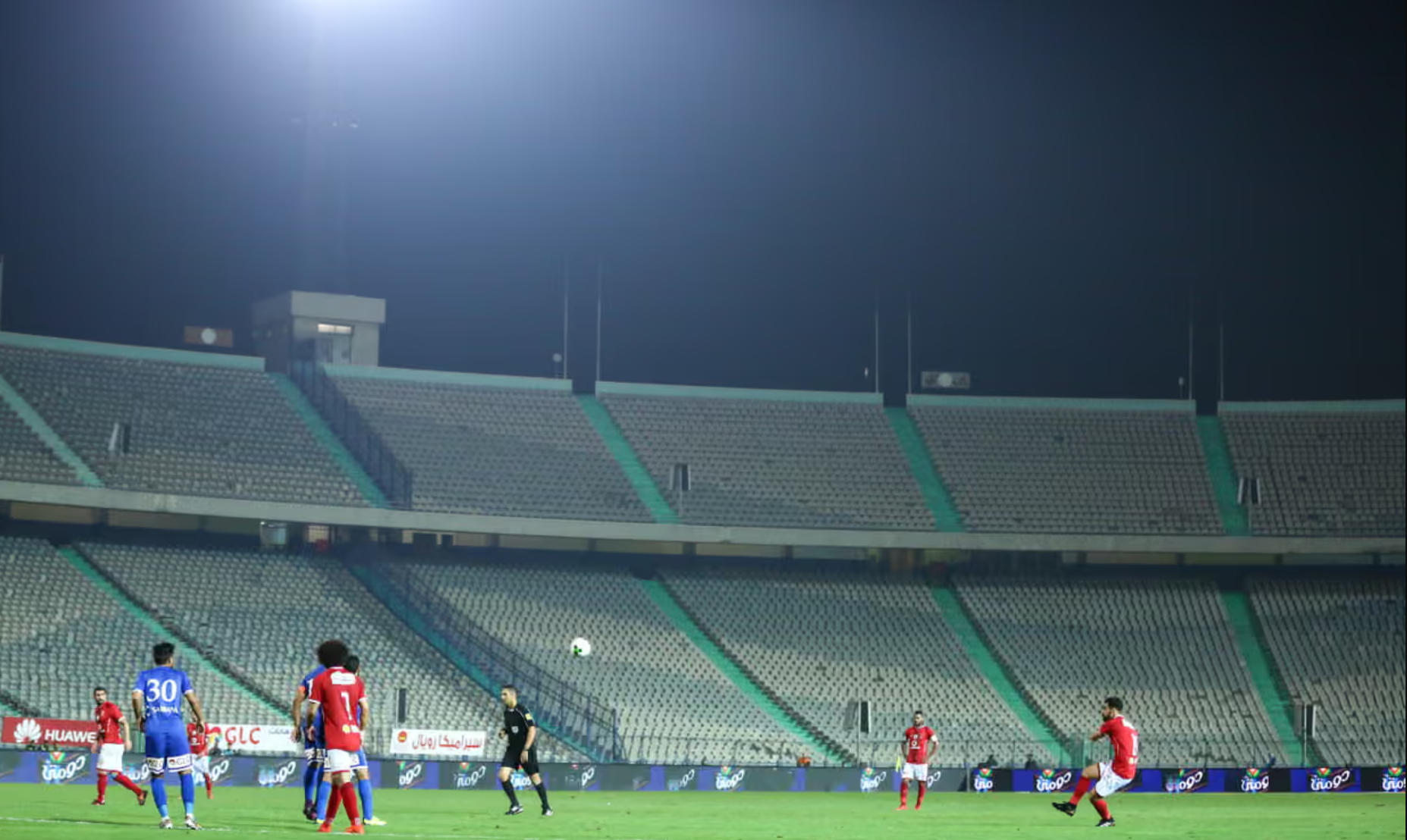
So when the fixture says "home", quite often it means a shared stadium with nobody in it. Everything home advantage is actually made of (the noise, the familiarity, the referee feeling a crowd behind him) simply is not there. And it has not been there for years.
The market prices those fixtures the way it prices every other league on earth. So the games come out cagey and level far more often than the number says, and the draw is the bet.
Five hundred and four qualifiers, the deepest lane in the entire book. +73.6 units, or £1,472 at £20 a point, from backing the draw in matches played in front of nobody. Better than a third come in, against a price that expects fewer.
A punter in Rotterdam working down a Sunday fixture list knows none of this. He sees two Egyptian clubs and a home side, and he prices it like Rotherham at home to Burton.
Which is the good news, because you don't need local knowledge either. You only need to know where the mistake is, and that is a thing you can measure from a spreadsheet in Yorkshire.
How it was tested
- Every bet repriced at exchange odds, bookie margin stripped out, commission paid
- Profitable in both halves of each league's history, not just overall
- Profitable in every individual season, so no average is hiding one enormous year
- Run against more than two thousand league and market combinations, so nothing lucky slipped through wearing a disguise
THE RECORD
The bits other tipsters delete
A qualifier is a fixture where the price lands inside the band a lane bets, and clears the filters behind it. Which band, and which filters, is the part you are paying for. Everything else is here: every qualifier, every month, flat one unit, nothing removed.
Backbone & bench, 12 lanes
Ranked by profit. Anything with fewer than twenty live months is greyed out, because there is not enough time on the board to mean much yet, whatever the return says.
Read the months column before the return column. A lane with five months behind it can show any number at all, so that is noise rather than a record, which is why it is greyed out here rather than shouted about. Settlement at exchange prices net of 2% commission. Every qualifier since January 2023 is in there, including the thirteen losing months and the drawdown. Names are ours, though members get the league, the outcome, the band and the minimum price.
MEMBERS
What members pulled out last month
Sent in by members. A good month rather than a normal one, and there are losing ones in between.
Withdrawal confirmation
Withdrawal confirmation
Withdrawal confirmation
Withdrawal confirmation
HOW IT'S GOVERNED
How a lane earns a stake
Six stages, and most things die at stage two. Nothing gets a penny on it until it has been through the lot.
Anyone can find a pattern in old results. The hard part is telling the difference between a real one and a coincidence that happens to look tidy. So every lane walks the same road, in the same order, and I have no way of skipping a step even when I badly want to.
The sweep turns something up
Every league I hold data for gets swept, over four hundred of them3, every outcome, every price band. Anything with at least eighty settled bets and a positive return gets flagged for a proper look (a low bar, and deliberately so). It is a shortlist, not a finding.
Eight windows, and it has to survive recent ones
The record gets cut into eight separate time windows. The lane has to be profitable in at least two-thirds of them, and it has to be profitable in the recent ones specifically. Something that worked beautifully in 2021 and has gone quiet since is worth nowt to you.
Everything is scored at exchange prices with commission taken off, because that is what you will actually get. Most candidates die here, and that is the stage doing the real work.
Somebody has to explain why
A number that works and cannot be explained is a coincidence waiting to be found out. So before anything goes near the board I go and find out why, and not from a stats site, because every punter on the exchange is reading the same one as you.
That means local-language press, regional sports channels I pay for, club forums run through translation, and local reporters who cover four clubs and know which one has not paid its players since May.
No structural reason, no place on the board. However good the number looks.
A full season at nothing a bet
It goes on the board in public, tracked at zero-stakes, for a minimum of a full season. Members watch it live and it cannot cost anybody a penny while they do.
Holding a paper lane costs nothing. Churning the board costs about fifteen points a year against simply leaving things alone, so there is no rush at this stage and no reason to invent one.
Half a stake, and not on a hot streak
Clear the paper season and it goes to half stakes. One more rule applies here and it is the one that surprised me most: a lane coming off a sustained hot run does not get promoted. Lanes promoted on heat go on to lose about five and a half percent.
A hot streak is a reason to sit on your hands. Half this industry does the exact opposite, which is roughly why half this industry does not last.
Full stake
Full unit, and it stays there until the demotion rules say otherwise. Which they will, eventually, because the median profitable run in a lane is about ninety-five bets, and deaths outnumber births roughly two to one. That is not a flaw, it is why this is a basket of thirty-three rather than a system of three.
How it comes off again
One bad run does not do it. After a deep dip, roughly 39% of lanes recover and 44% die. That is a coin flip, and you do not act on a coin flip. It takes a long-term decline and two consecutive bad patches before anything comes off the board.
When a lane does die, it stays printed in the record. Deleting it would flatter every number on this page.
BEFORE YOU ASK
The questions I always get
Record runs 2 January 2023 to 22 August 2026. Flat one unit a bet, best price available at the time.
The basics
So what is it, in plain English?
It backs the same side, in the same league, in the same odds range, every time that combination comes up. Who is playing does not enter into it.
Each combination is a lane: a competition, a side, and a price band. That is the whole decision.
Why does not looking beat looking?
Because some markets are priced slightly wrong in the same direction, year after year. A league where draws are underpriced stays that way for seasons at a time, because the bias is in how the competition gets priced rather than in any single match.
We look for that across nine years of results and bet it mechanically. The pattern does not need to be big. It needs to be repeatable.
Do you really never check the form?
Not at all, and that is the finding rather than the shortcut. Every filter we tested that added judgement (recent form, league position, head to head) made returns worse.
A tipster who watches the games is competing with thousands of people doing exactly the same thing. Nobody is competing to price the away side in the Ethiopian Premier League properly.
The record
What has it actually made?
| Backbone & bench | All three tiers | |
|---|---|---|
| Bets | 2,310 | 4,057 |
| Bets per week | 12.3 | 21.4 |
| Strike rate | 36.0% | 35.9% |
| Average odds | 3.76 | 3.52 |
| Return | +26.6% | +20.6% |
| Profit at £20 a bet | +£12,286 | +£16,686 |
Three and a half years, every bet printed, nothing removed.
What do backbone, bench, expansion and paper mean?
Backbone are the lanes with the longest and strongest records, the core of the book. Bench cleared the same bar on a shorter record and are now staked alongside them at full stake. Expansion is a larger group of newer lanes, staked and settled on its own line. Paper lanes are published but never staked. They are the waiting room, and you see them so you can watch a lane earn its place before we put money on it.
The tiers are settled and reported separately, because a blended number only means anything if you can see the parts.
Where you place them
Do I need a Betfair account?
Exchange, and it matters more than it sounds. Where we hold a genuine recorded price, around 95% are best-priced on the exchange rather than at any bookmaker.
That is not an accident. These are unfancied selections in small competitions at 3.00 to 5.00, which is exactly where a bookmaker margin is heaviest and the exchange is cheapest. And the exchange will not close your account for winning.
Has commission been taken off already?
Yes. Every exchange figure in the record is net of 2% commission. Nothing you see needs adjusting downward.
What is the minimum price for?
Every selection carries a minimum price, and it is set where the bet is comfortably worth having, rather than at some optimistic number you will never get. Take whatever is on offer at or above it and you are done.
I do not send selections that cannot be filled. If a market is too thin to get on at a sensible price, it does not go on the card in the first place.
What if I miss one?
Leave it and take the next one. There are around twenty-one a week, so no single bet is worth chasing a worse price for, and the floor is there so you never have to think about whether it is still value.
What it feels like
How much of my day does this take?
About 21 a week on the full book, 12 a week on backbone and bench. Some days there is nothing at all and Mondays are often blank.
Five minutes in the morning covers it.
How often will I actually win?
About 36%, at average odds of 3.52. That combination is the whole engine: you get paid properly when they land, so you never need to be right often.
It is why this works where tipping does not. Nobody has to predict anything.
How bad does a bad run get?
The worst stretch in nearly four years was thirteen, and the record still finished on +£16,686. That is exactly what a thirty-three lane book is for, so no single run gets to decide anything.
Every lane has had quiet months inside winning seasons. The prices are generous exactly because most people cannot sit through them.
How far down have you ever been?
28.4 units (about £567) across 4,057 bets that returned £16,686. Roughly three percent of the profit, at the deepest point in three and a half years.
That ratio is the number I would judge any record by, and it is the one I am proudest of.
Will I be in front most of the time?
The bank climbs in steps and moves sideways in between, which is what a grinding edge looks like from the inside. You only sit at an all-time high on a winning bet, so most days you are somewhere just below one.
The number that actually matters is how deep the dips get, and across three and a half years the deepest was twenty-eight units against £16,686 of profit.
What am I actually backing?
Just over half are draws (2,093 of 4,057). The rest splits almost evenly between away sides (991) and home sides (973).
Draws are where the softest prices in football live, because almost nobody wants to back one. That is the whole reason the edge is sat there.
Being straight with you
Where is this record at its weakest?
Two, and both of them make the headline more conservative rather than less.
Part of the record is priced from a model rather than an observed price. Where we did not archive live odds, we estimate the best bookmaker price by reducing the market margin a fixed amount. Measured against the periods where we do hold real prices, the true price was better than our estimate, so the number is conservative. But it is still an estimate.
Part of the record covers the window the lanes were selected on. Any system flatters itself over the period it was built from, so the seasons that were never used in selection are the ones I weight most heavily, and those are the numbers I would rather you judged this on.
What should I honestly expect?
Plan around a single-digit to low double-digit return over a full season on the exchange, and treat anything above that as a good year.
I would rather set the bar somewhere I can clear it than quote you the headline and spend the season explaining myself.
What happens when one stops working?
There is a written policy and it gets followed to the letter. A lane does not come off for one quiet month, because after a deep dip, recoveries and deaths are close to a coin flip, and acting on a coin flip is how people wreck good books.
It takes a declining long run trend and two consecutive poor stretches. Equally, a lane does not get promoted because it is hot: a hot run in a mediocre lane is one of the strongest signals it is about to revert.
How often do the lanes change?
Rarely, and reluctantly. When we simulated actively managing the book against simply leaving it alone, leaving it alone won by a wide margin.
Stability is the strategy. Most of the work is resisting the urge to fiddle.
How easy is it to walk away?
Any time, in two clicks, and the ten-day trial charges you nothing if you leave inside it. I would rather you left early than stayed cross.
Who does this suit best?
It suits someone who can leave it alone. Place them, log them, and look at the total once a month rather than once a night.
If you enjoy picking and choosing, or you want an income by Christmas, you will get more out of something else, and I would rather tell you that now than take the money and let you find out.
THE DIFFERENCE
What you are getting instead
Most services sell you one idea and hope it lasts. This is not that.
A normal tipping service
- One system, and your whole subscription rides on it
- Leagues everybody prices, so the value is gone by the time the email lands
- No price floor, so you take whatever is left
- When it stops working, the record quietly gets shorter
- You are told what to think about each match
The Blind Edge
- Thirty-three lanes, so no single one gets to decide your year
- Leagues nobody bothers to price properly, swept from over four hundred
- A minimum price on every selection, set where the bet is worth having
- Dead lanes stay printed in the record, losses and all
- You are told the league, the outcome and the band. Nothing else
FROM MEMBERS
What they actually say
“up 40 quid on the week and thats me been gubbed everywhere. first time in ages” John Doe · Derby
“Lost 9 on the bounce in November and nearly packed it in. Glad I didn't.” John Doe · member since 2024
“Takes me five minutes. Thats the bit I wasnt expecting” John Doe
Placeholder examples. Real member messages go here.
THE TRIAL
How the ten days work
- Join with your name and email, takes 30 seconds
- Get every qualifier by email, with league, outcome, band and minimum price
- Place them on the exchange or at any bookie taking the price
- After 10 days, stay on at £79 a quarter or £119 for the season, or walk away, your call
JOIN
Pick your level
Ten days free on both. Cancel inside the ten and nothing is charged.
Ten days free
You see every selection, priced and dated, before a penny leaves your account.
One price, no upsells
There is no premium tier holding the good lanes back, and no syndicate email at five hundred quid.
Cancel in two clicks
No phone call, no retention offer, no talking you round.
- All thirty-three lanes, daily by email
- League, outcome, band and minimum price
- The live tracker, updated weekly
- Full historical record to download
- The bookie directory, 200 licensed firms most punters have never heard of
- Everything in the quarterly, for a whole season
- Half the price, and less than two quarters for four
- Your rate is locked for as long as you stay on
- The Blind Edge book, the whole method written out
- New lanes a month before anybody else gets them
Ready to bet blind?
Ten days of qualifiers, on us. See what you make of it.
Start Your Free 10-Day Trial ›See every qualifier settled this season →
Notes and sources
- Active subscribers across all services as at August 2026. This is a live count, not a cumulative total of everyone who has ever joined.
- All returns are struck at exchange prices with 5% commission taken off. Where live odds were not archived, the best bookmaker price is estimated from a model, which makes the published figure more conservative rather than less. The FAQ above sets out both estimates in full.
- The sweep covers every league held in the archive with settled results, across every outcome and every price band. A league and band pairing with fewer than eighty settled bets is not eligible to be flagged.
- Months live counts only the months in which a lane actually produced a qualifier. Summer leagues sit idle for half the year, so a calendar span would overstate how long something has been tested.
- NIFL Premiership average attendance of 1,241 for the 2025-26 season, against 1,522 in 2024-25 and 1,589 in 2023-24, published by the Northern Ireland Football League. Ground capacities from published stadium records. League of Ireland attendance figures from league and club reporting.